
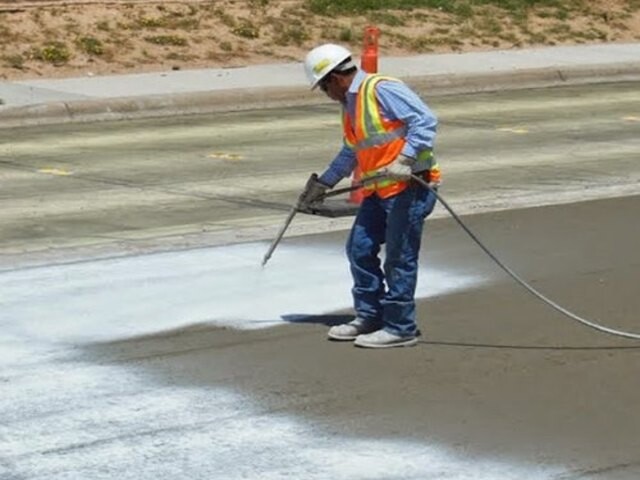
Concrete curing is a critical process in the construction industry, ensuring that concrete reaches its full potential in terms of strength and durability. Proper curing controls moisture loss, prevents cracks, and enhances the surface finish. Utilizing effective concrete curing products is essential to achieve these outcomes. These products, ranging from curing compounds to blankets and seals, provide various benefits tailored to specific project needs. Understanding the right concrete curing products and their application can significantly improve the longevity and performance of concrete structures.
Understanding Concrete Curing
Concrete curing is the process that maintains adequate moisture, temperature, and time to allow cement hydration to occur. It is a crucial step that directly influences the concrete?s ultimate strength and durability. The process can be broken down into several key stages:
- Initial Curing: Begins immediately after concrete is placed and finished. The aim is to prevent moisture loss and temperature variation.
- Intermediate Curing: Maintains the moisture and temperature conditions established during initial curing.
- Final Curing: Ensures moisture retention and temperature control until the concrete has achieved sufficient strength.
Each stage requires specific techniques and products to maximize effectiveness.
Types of Concrete Curing Products
Curing Compounds
Curing compounds are one of the most popular concrete curing products. They are applied as a liquid and form a moisture-retentive film on the surface of the concrete. Benefits include:
- Easy application and quick drying, reducing labor costs.
- Effective moisture retention, preventing surface cracking.
- Available in a variety of formulations to suit different environmental conditions.
These compounds are ideal for projects where traditional curing methods may be impractical or expensive.
Curing Blankets
For projects in challenging environments, curing blankets offer a practical solution. These blankets provide thermal insulation and moisture retention, making them suitable for:
- Cold weather conditions to maintain the concrete temperature.
- Large surface areas where uniform curing is critical.
- Projects requiring protection from the elements.
Curing blankets are reusable, offering a cost-effective option for long-term projects.
Sealing Agents
Sealing agents are used post-curing to enhance the concrete’s surface durability and appearance. These agents:
- Protect against chemicals and environmental damage.
- Enhance the aesthetic appeal of the concrete surface.
- Provide long-term durability and resistance to wear and tear.
Sealing agents are particularly beneficial for concrete surfaces exposed to heavy traffic or harsh conditions.
Choosing the Right Curing Product
Several factors should be considered when selecting the appropriate concrete curing products for a specific project:
- Environmental Conditions: Temperature, humidity, and exposure to the sun can all impact the effectiveness of curing products.
- Project Size and Scope: Large or intricate projects may require specialized products or techniques.
- Budget Constraints: While some products may have a higher initial cost, their long-term benefits can lead to cost savings.
Consulting with experts or conducting thorough research can aid in identifying the most suitable products for specific needs.
The Future of Concrete Curing
The development of innovative concrete curing products continues to evolve, with sustainability and efficiency at the forefront. New technologies are emerging that offer enhanced performance while reducing environmental impact. As the construction industry moves towards more sustainable practices, these innovations will play a critical role in shaping the future of concrete curing.
For construction professionals, staying informed about the latest advancements and understanding their applications can lead to more successful project outcomes. By leveraging effective curing products, the durability and strength of concrete structures can be significantly enhanced, contributing to the long-term success of any construction project.